Imagine one employee in an office somewhere in Bangkok. Let’s call her Ploy.
On Monday, her manager told the team they needed to use AI more. On Tuesday, Ploy did. With forty customer emails to answer before lunch, she opened a free AI chatbot on her phone and pasted in the first one. Thirty seconds later she had a better reply than she would have written in ten minutes. By eleven, her inbox was empty.
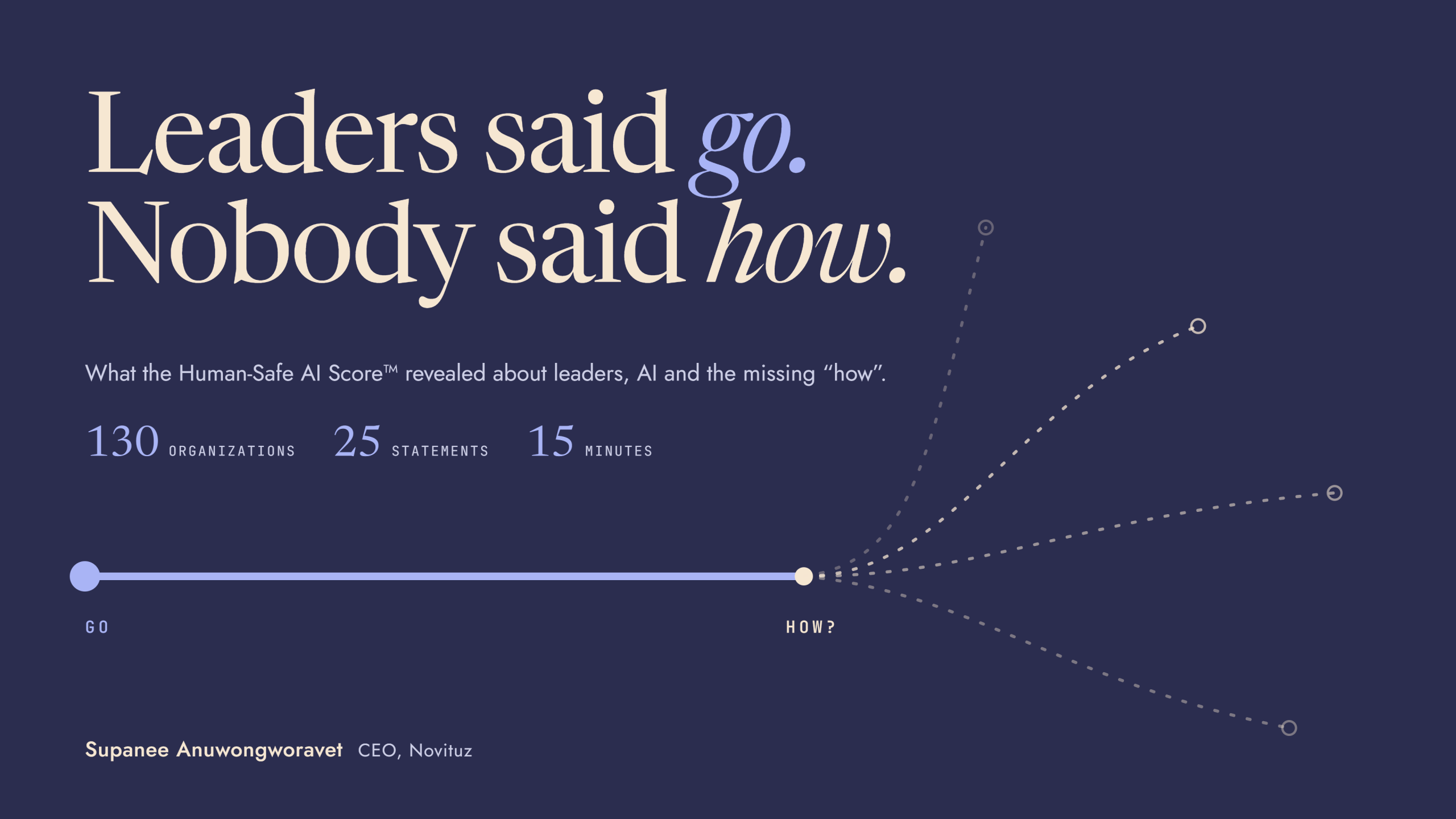
Her manager had said go. Nobody had said how: which tool to use, what never to paste into it, who to ask if something went wrong.
Ploy isn’t doing anything wrong. She is doing exactly what she was asked.
Why I wanted to know
As a speaker and trainer, I spend a lot of time in rooms with leadership teams learning to work with AI. Again and again, the answers and the level of awareness in those rooms surprised me. The enthusiasm was real. The clarity about rules, ownership and safe use often wasn’t.
I wanted to know whether those moments were the exception or the rule. So we built a way to check: the Human-Safe AI Score™, twenty-five statements and fifteen minutes on whether people can use AI with confidence while keeping their judgment, their trust and ownership of their work.
This year, leaders from 130 organizations took it, from manufacturing and banking to hospitality, energy and healthcare. It is not a national survey. But the answer to my question was clear.